
01 · EDUCATION
Interactive Learning Platform
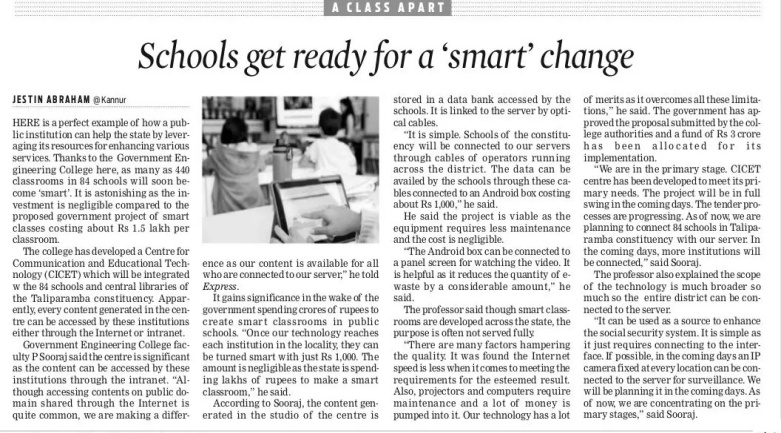
Digitisation of 440 classrooms across 104 LP/UP schools in Taliparamba Legislative Constituency.
Project details →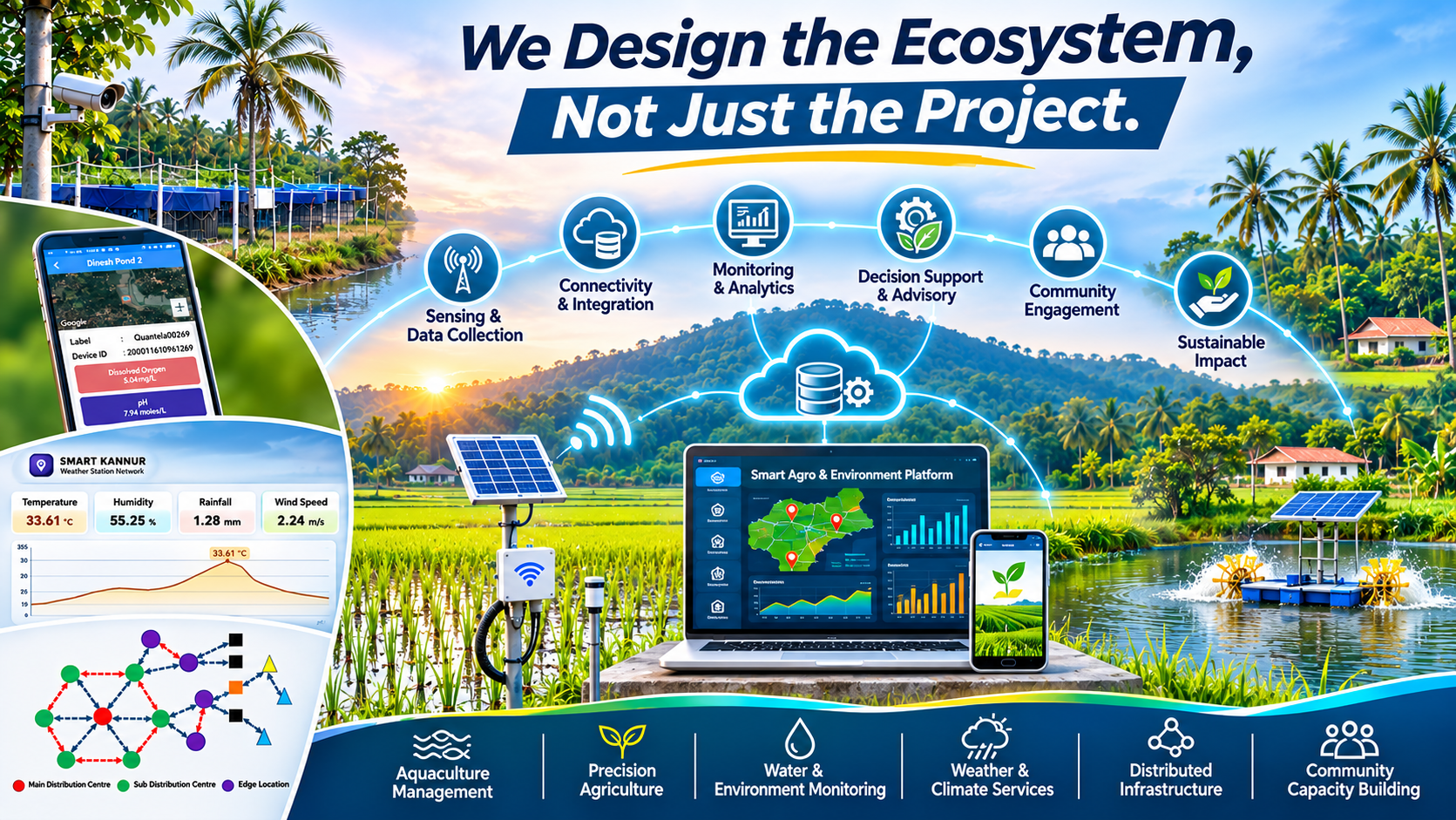
As the social outreach arm of Government College of Engineering Kannur, CICET is an internal, self-managed multidisciplinary body. Faculty members collaborate to address societal concerns that require indigenous and innovative solutions.
The Centre's work is grounded in real systems, real users, real constraints, maintenance and measurable impact.
More about CICET →CICET brings together faculty expertise across disciplines to address real societal concerns through indigenous, innovative and deployable engineering solutions. The Centre works beyond prototypes—towards systems that can be implemented, maintained and used.
Discover CICET Explore projects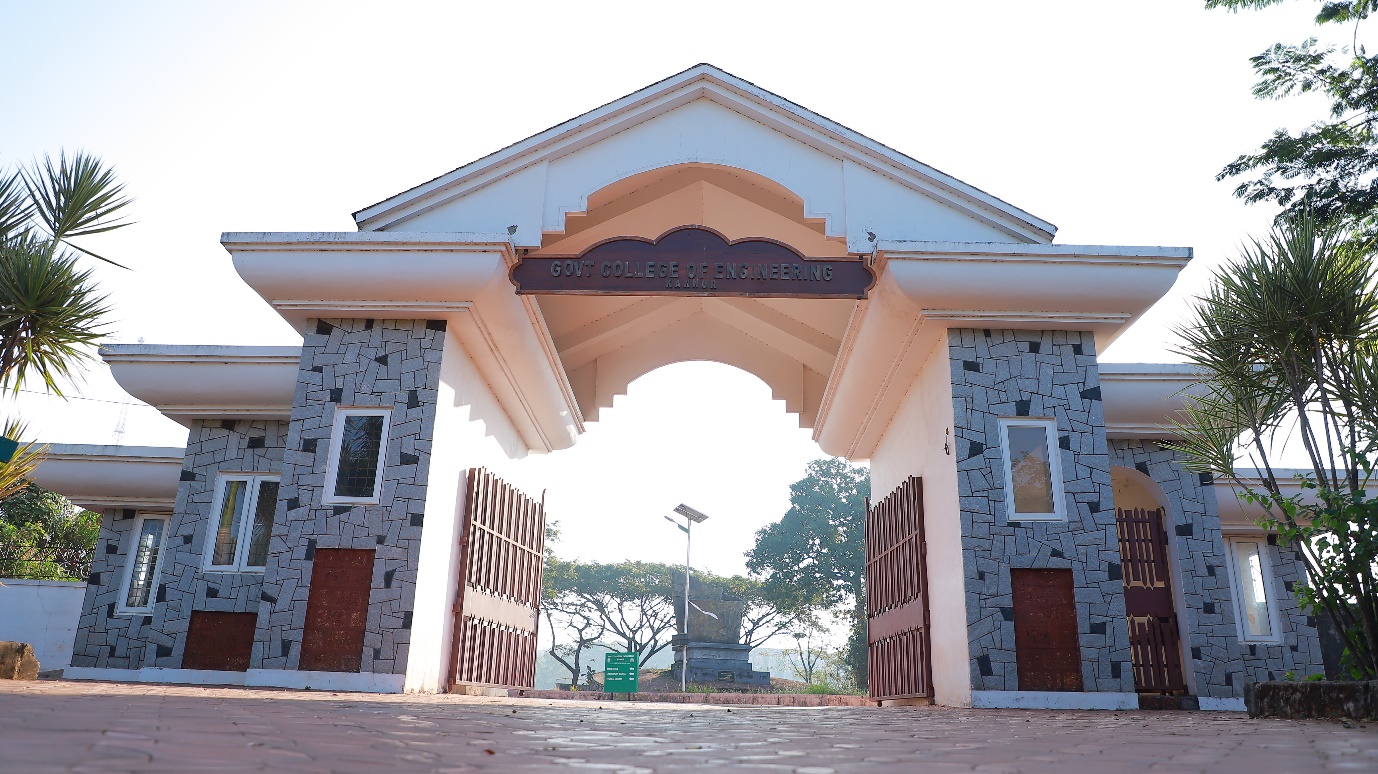
From connected classrooms and remote connectivity to public surveillance, agriculture and smart infrastructure.
Digitisation of 440 classrooms across 104 LP/UP schools in Taliparamba Legislative Constituency.
Project details →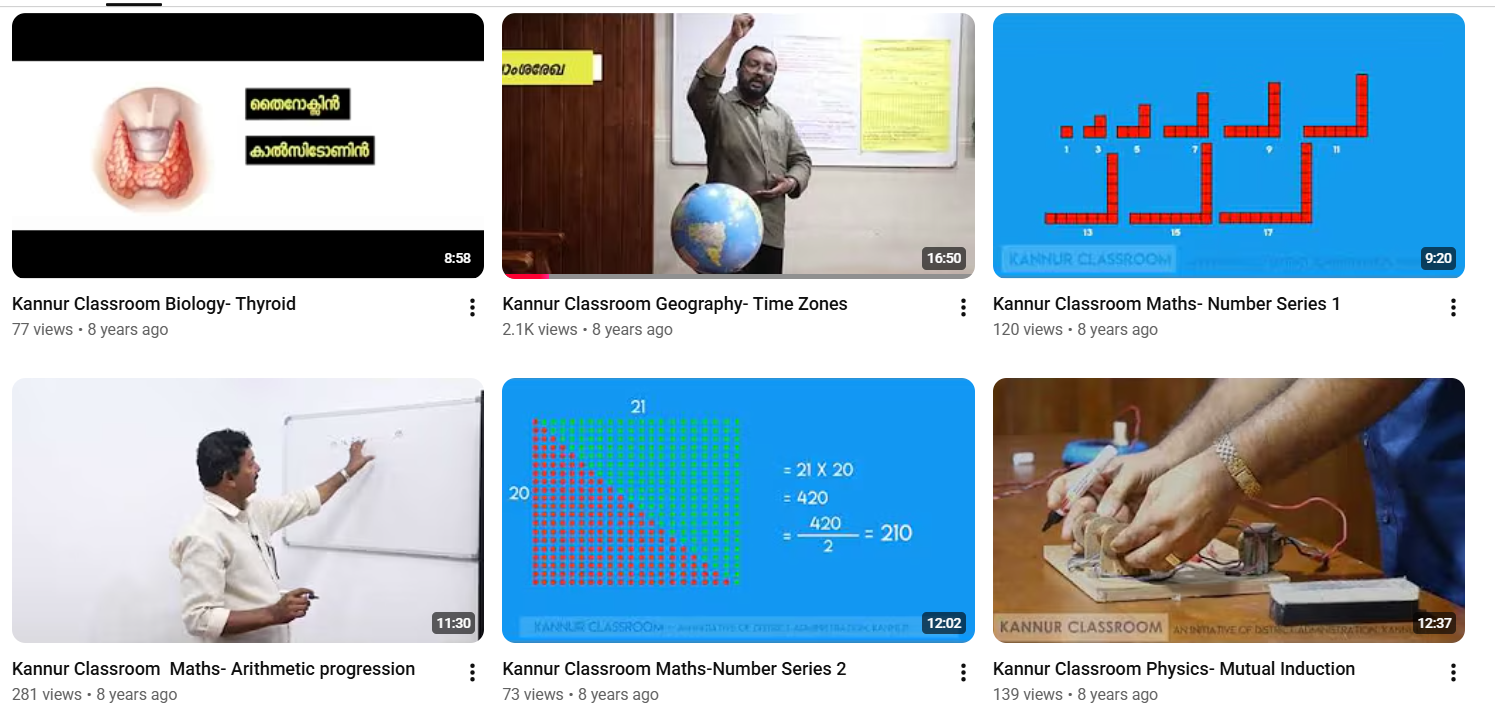
Educational content creation in the local dialect; the initiative received the State e-Governance Award.
Project details →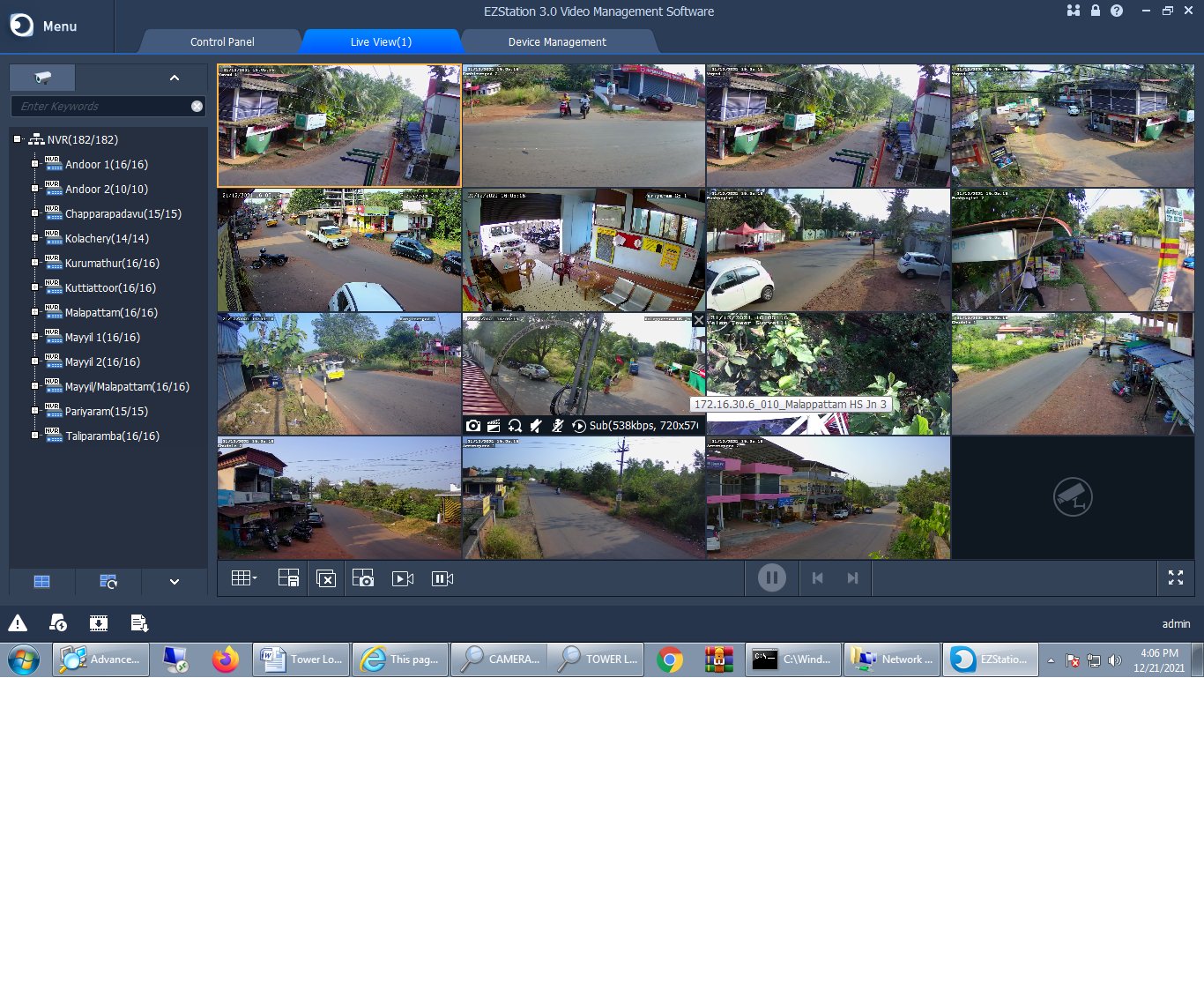
Extensive on-road surveillance across 11 local bodies in Taliparamba constituency, designed to operate without internet.
Project details →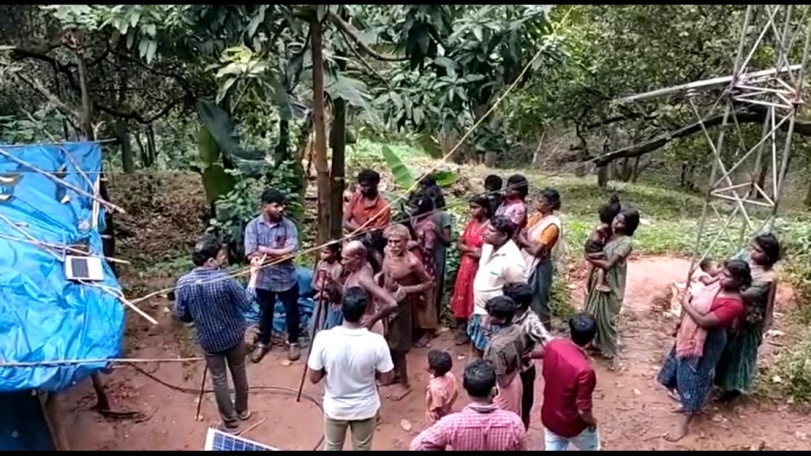
Long-distance 5 GHz wireless connectivity pilots in Nilambur, Kerala, and Erode, Tamil Nadu.
Project details →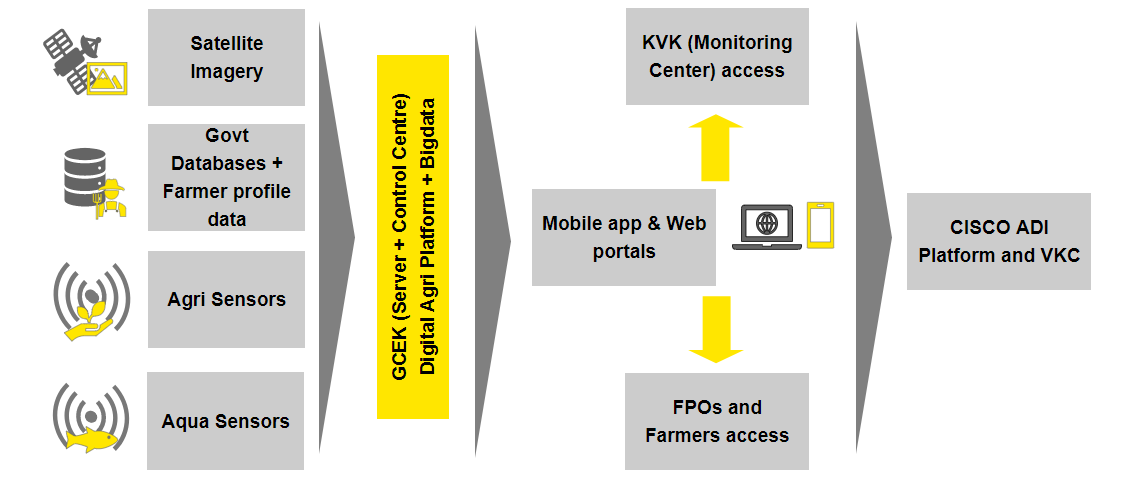
A CISCO-sponsored initiative focused on paddy cultivation in Mayyil and aquaculture in Dharmadam.
Project details →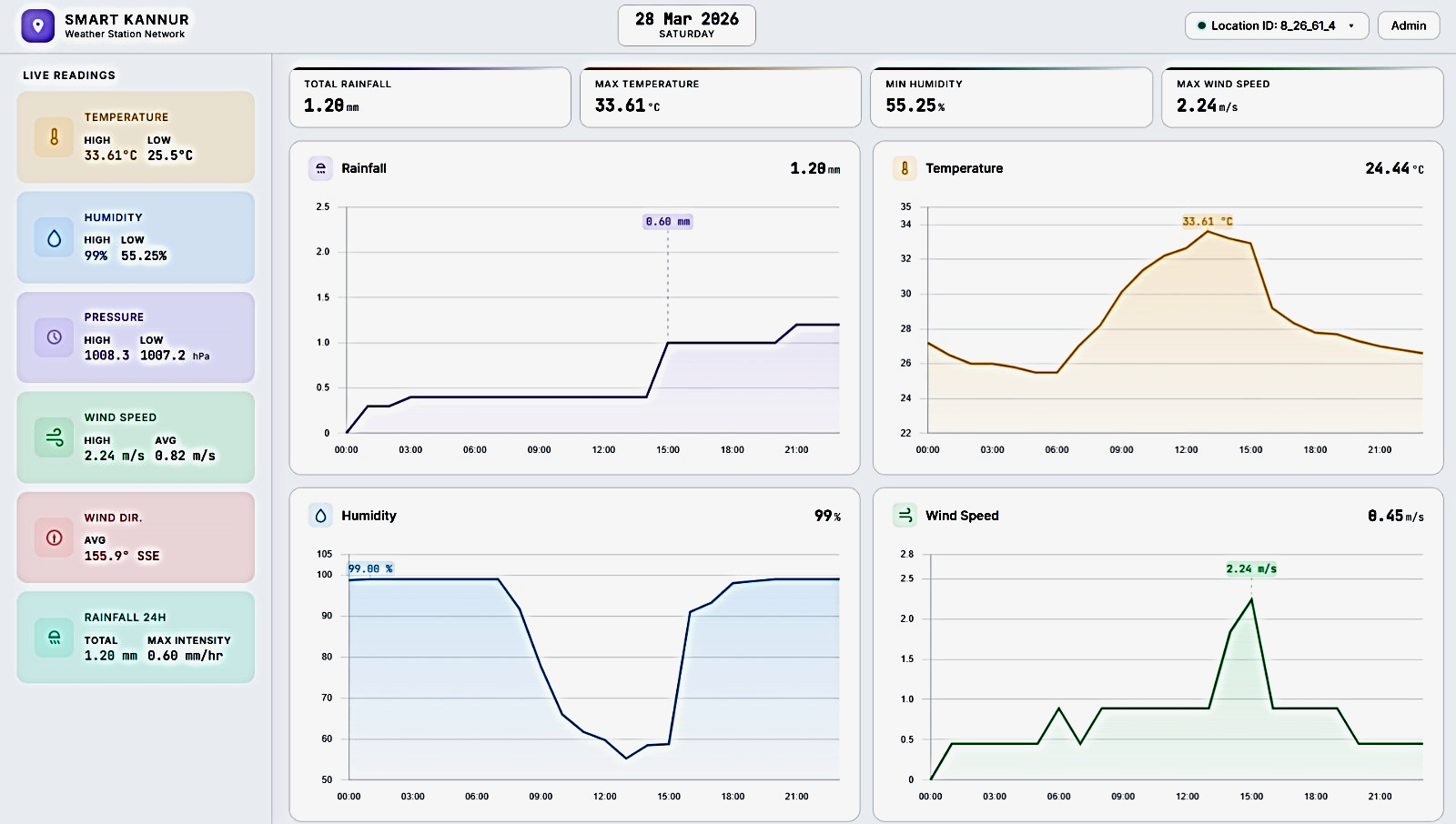
An ongoing integrated surveillance initiative connecting local bodies and field infrastructure.
Project details →Potential extensions and future development areas for technology-enabled public infrastructure.
Network-enabled display systems for sharing timely public information and announcements.
Secure communication facilities to support coordination among public institutions and offices.
Communication infrastructure for public announcements and location-based information.
Potential network-supported monitoring to assist traffic observation and management.
Connected sensors and monitoring applications for selected public-service requirements.
A scalable foundation for additional technology-enabled public infrastructure initiatives.
Understand the need and the context in which the system must work.
Bring users, institutions and implementation partners into the process.
Choose appropriate and sustainable technologies for the actual constraints.
Move from design to working systems in the field.
Support the people and institutions who use the systems.
Focus on ownership, maintenance and assessment of outcomes.
Centre for Integrated and Collaborative Engineering Technologies
Government College of Engineering Kannur